A closer look · 4 min read
How to evaluate skincare before-and-after photos.
Two photos. Not the whole story.
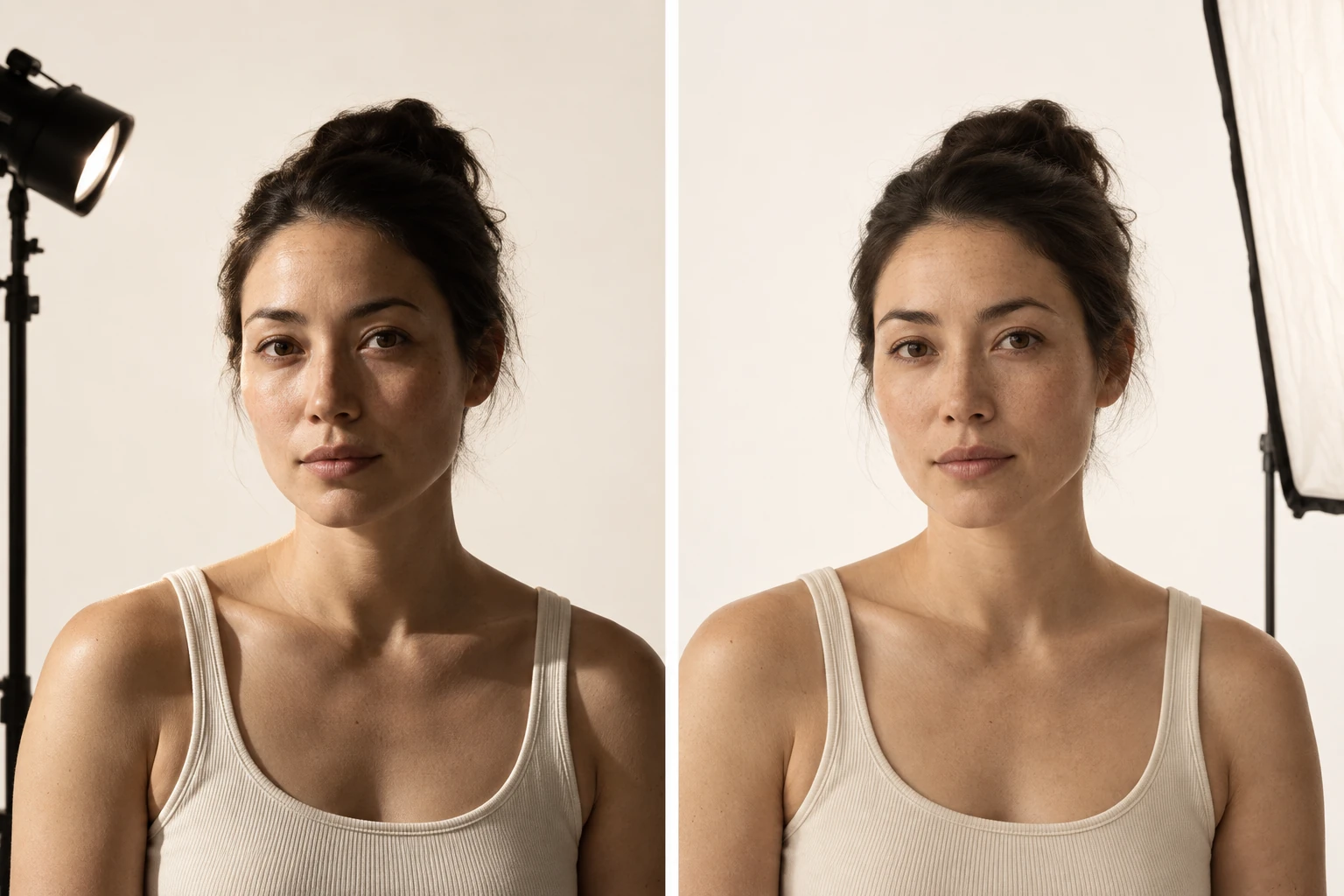
Two photographs, placed side by side, can tell a very persuasive story. We notice a difference. We read the caption. Almost without thinking, we connect the two: this product, this routine, this result.
Sometimes the story comes with useful detail. Sometimes the photographs ask us to fill in the gaps ourselves.
A before-and-after can be a starting point for curiosity. It becomes more useful when we know what happened inside the frame—and between the frames.
A photograph can show a difference. It cannot, by itself, explain the difference.
First, compare the photographs.
Look at the light before you look at the claim. Light from the side creates a different pattern of highlights and shadows from broad, diffused light. The face may look different because its illumination is different. Adobe’s portrait-lighting guide explains how direction and softness shape a portrait.
Then look at the camera position. Is the face photographed from the same distance and angle? Research on short-distance portrait photography shows how camera distance can change apparent facial proportions. That finding concerns perspective, not a change in someone’s skin.
Color deserves a second look, too. White balance changes how warm or cool a photograph appears. A warmer frame is not, on its own, proof of a change in the person.
Also notice expression, makeup and any disclosed processing. You may not be able to identify every difference by looking. “Not stated” is a useful answer.
Ask what happened in between.
How much time passed? Was the featured product the only change? Did the person change the rest of their routine, too? Was each image taken at a comparable moment?
These questions are about the explanation attached to the photographs. If several things changed, the images alone cannot tell us which change produced the result. Even carefully matched photographs do not supply that missing information.
A personal experience can still be worth hearing. It just needs enough context for us to understand what is being shared: an observation, a personal interpretation, or a claim supported by evidence beyond the photographs.
A small checklist for your next scroll.
Before treating a comparison as a reason to buy, pause on these six details:
| Look for | Ask |
|---|---|
| Lighting | Are the direction, softness and brightness comparable? |
| Camera position | Are distance, angle and framing similar? |
| Presentation | Are expression and makeup comparable? |
| Timing | How much time passed between the photographs? |
| Other changes | What else changed besides the featured product? |
| Processing | Are filters, retouching or adjustments disclosed? |
You do not need to solve the image like a puzzle. The point is to notice whether the information you would need is actually there.
Curiosity does not have to become suspicion.
Missing context does not automatically mean a comparison is dishonest. It means there is something you do not yet know. A simple “Were these taken in the same light?” can be more helpful than an accusation—or an immediate purchase.
And one person’s experience does not establish what you should expect for yourself. Let it be a question to explore, rather than a standard your face has to meet.
The next time two images stop your scroll, give the space between them a little attention.
You’re already beautiful. Exactly as you are.
Original sources.
put it into practice.
Before accepting a comparison, look for the time between images, the products or treatments used, and whether anything else changed. Check the light, camera distance, angle, expression, and makeup. If those details are missing, the pictures may still be interesting, but they cannot answer all your questions about the result.
For your own record, choose a repeatable place and camera position, keep filters off, and note the date and routine. Include how your skin feels, which a photo cannot capture. Consistent photos make comparison more useful, but they still do not isolate the cause of a change. The images in this article are AI-generated illustrations, not a real person’s treatment results or evidence that POÉ produced an outcome.