a closer look · 3 min read
Why the skin around your eyes needs gentler care.
the skin around your eyes needs a gentler approach. here’s why.
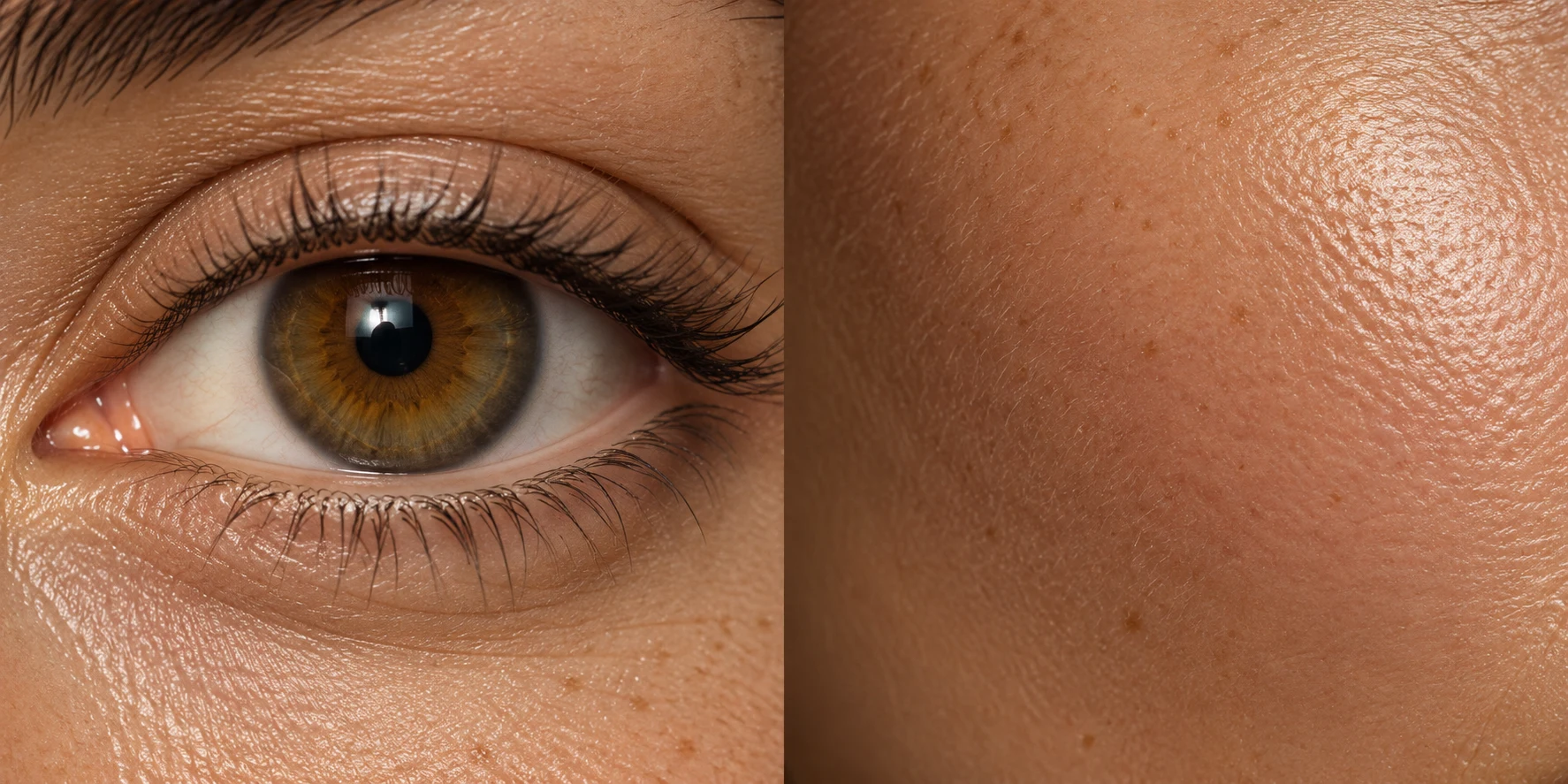
your eyelids and cheeks have different structures. the skin on your eyelids is thinner and more flexible, adapting to every blink. understanding that difference can help you care for each area more thoughtfully.
what makes the eye area different.
eyelid skin has a particularly thin dermis, the layer beneath the epidermis. it also has fewer surface lipids than nearby cheek skin. the eye area is one of the first places where signs of ageing can become visible. [1] [2] [3]
that does not mean it is always drier. research has found eyelid skin can maintain hydration comparable to adjacent facial skin, despite having fewer surface lipids. its structure is different; how it feels still matters. [2]
a gentler routine.
cleanse with care. use a gentle cleanser and avoid scrubbing or pulling at the skin. choose products suitable for use around the eyes and follow their instructions. [4]
keep moisture simple. a gentle, fragrance-free moisturizer can help relieve dryness. if a product stings, burns or leaves a rash around your eyes, stop using it. persistent irritation deserves a dermatologist’s advice. [4] [5]
protect from the sun. use broad-spectrum, water-resistant SPF 30 or higher on exposed skin, following the label. add sunglasses with UV protection and seek shade. keep sunscreen out of your eyes. [4] [6]
notice each area.
pay attention to comfort as well as appearance. your cheeks may feel comfortable while the skin around your eyes feels tight or irritated. let those differences guide the care you give each area.
at POÉ, we’re building a mirror around a more personal understanding of your skin.
POÉ. a mirror that knows you.
sources.
- facial skin thickness study
- eyelid skin structure and hydration study
- periorbital skin ageing study
- american academy of dermatology: gentle care, moisturizer and sun protection
- american academy of dermatology: contact dermatitis around the eyes
- american academy of dermatology: sunglasses and sun protection
put it into practice.
Read the directions on each product before bringing it close to your eyes. A product you enjoy on your cheeks is not automatically intended for the eyelids. Keep a note of which products you used and where, especially if one area feels uncomfortable while the rest of your face feels fine.
When reviewing your routine, separate what you can see from what you can feel. Shadow in a photograph is not the same observation as itching, tightness, or stinging. The article’s sources explain the eye area’s structure and gentle-care principles; they do not establish which product is right for every person. Persistent irritation is a reason to seek individual advice rather than keep experimenting.