Everyday rituals · 5 min read
How to audit your skincare and beauty products
A small audit of what you buy, what you reach for, and what you’d choose again.
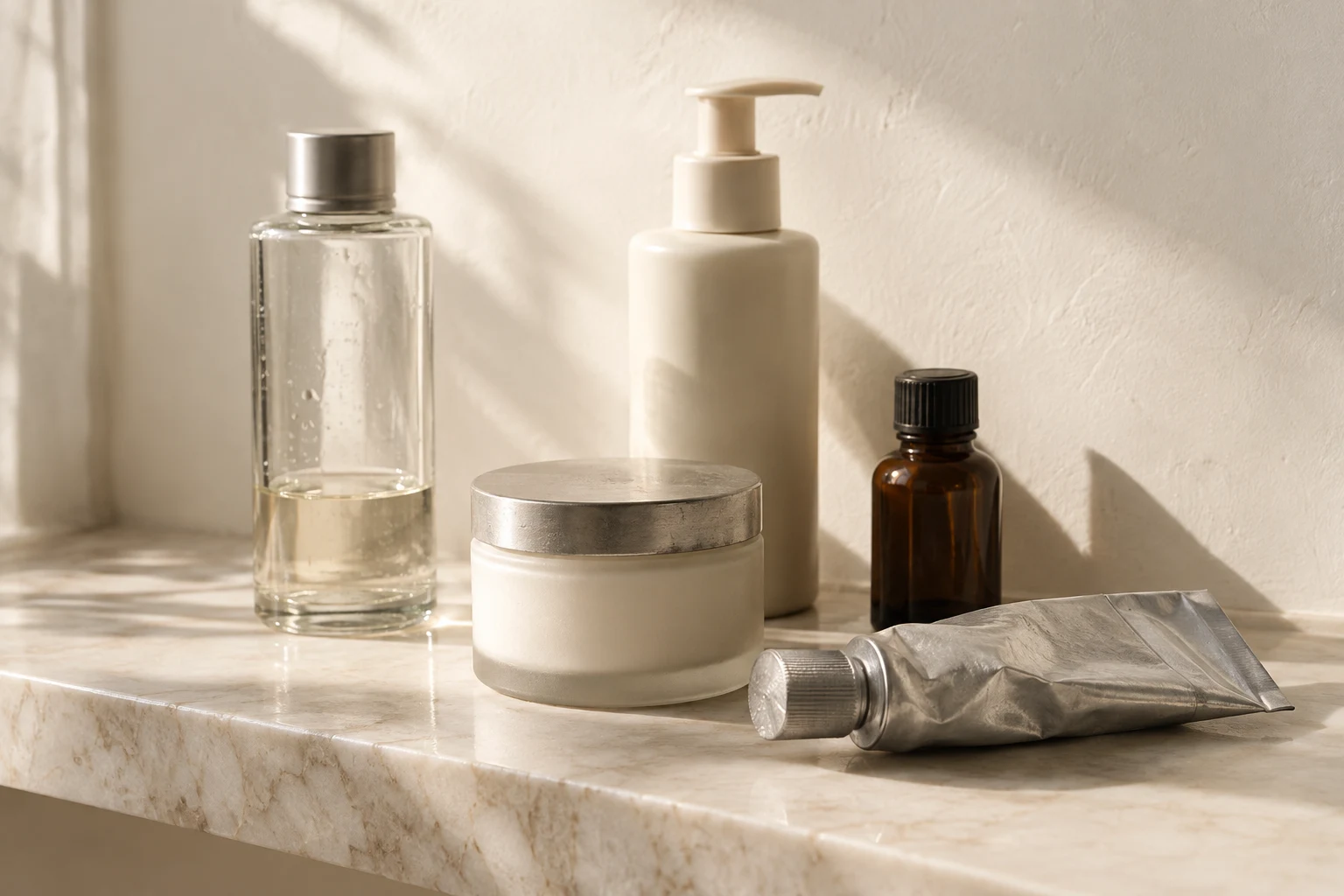
There’s the bottle you reach for without thinking. The one you save for a slow Sunday. The one you bought for the person you imagined becoming. And, somewhere behind them, a product you’d forgotten you owned.
A beauty shelf can hold a lot of intentions. Looking at it, though, you can’t always tell which ones became part of your life.
Before adding something new, try a different question: what has earned its place here?
“Working” can mean more than one thing.
Here, we’re talking about how your shelf fits your life: what you enjoy using, what you make time for, and what you want to buy again. That is a different question from whether a formula delivers a particular skin result.
A lovely texture can be worth something to you. So can convenience, a familiar scent, or a few quiet minutes at the end of the day. You get to decide what you value. This audit simply gives those preferences somewhere to go.
Four questions. No perfect score.
Choose a handful of products, or start with one shelf. For each item, note whether you bought it, used it, finished it, or bought it again. If it was a gift or sample, say so. These are separate observations, not steps you have to complete.
What made you choose it?
When did you last reach for it?
Did you want to reach the end?
What brought you back?
An occasional lipstick doesn’t need daily use to justify its place. An unfinished bottle isn’t a personal failure. And buying something twice doesn’t prove it works: it tells you that you chose it twice. The interesting part is your reason.
Meet your shelf.
Add your own products. Leave anything blank. This is a reflection tool, not a product rating.
3 product entries. There is no ideal total.
Your entries stay in this open page and are not sent anywhere. Download your notes before closing or reloading. No score, benchmark, or recommended product count.
Look for a reason, not a verdict.
If something has been sitting untouched, finish this sentence: “I don’t reach for it because…”
Maybe the packaging is awkward. Maybe you don’t enjoy the feel. Maybe it belongs to a ritual you love in theory but rarely have time for. Or perhaps it’s simply waiting for the right occasion.
Those answers are more useful for your next purchase than calling the last one a mistake. You can love beauty and still decide that a particular purchase didn’t fit.
If you stopped using something because it caused discomfort, record that honestly. Finishing a bottle is never the goal of this exercise, and these notes are not an instruction to restart a product.
If spending matters, make it visible.
You can add what you paid alongside each product. Keep it factual: the actual price, not today’s list price, and “gift” or “sample” where relevant.
Then ask what you would choose again at that price. A frequently used product might feel worth it; an occasional indulgence might, too. There’s no need to turn pleasure into a productivity metric.
We wouldn’t label every unfinished purchase “wasted money.” Some were experiments. Some were enjoyable for a season. What matters now is whether that information changes your next decision.
Give your next purchase a job.
Before checking out, complete one sentence:
Your answer can be practical: it replaces something you’ve run out of. It can be personal: you love the ritual. It can even be curiosity, with a budget you’re comfortable spending on an experiment.
If you don’t have an answer yet, you can leave the decision open. The wish list will still be there.
A shelf with room for you.
This isn’t a challenge to own fewer things. It’s an invitation to notice your own preferences before another promise takes their place.
Keep the joy. Learn from what you don’t reach for. Let your next choice reflect the life you actually have.
You’re already beautiful.
Exactly as you are.
An original POÉ editorial exercise. The four questions are not a validated scale and do not assess product safety or effectiveness. No population statistics, product endorsements, or clinical claims are presented.
Also in mirror, mirror: Same face. Different light.
put it into practice.
Group your products by what you use them for, then mark which ones you actually reach for. For each, note its opening date if known, its label directions, and what you like or dislike about using it. A duplicate category is a prompt to think, not an instruction to layer everything together.
Use the shelf audit to decide what deserves a place in your routine before creating a replacement shopping list. Separate an empty essential from a product you bought out of curiosity and rarely use. You may find that the most useful next step is a simpler arrangement or clearer instructions. A higher price, a longer routine, or an impressive ingredient list does not by itself tell you whether the product fits your needs.